Objects may be unknown, occluded, reflective, or difficult to grasp
Industrial Operations / Delivered project
Autonomous Robotic System for Nuclear Waste Sorting
A safety-led blueprint for identifying, grasping, and routing objects in controlled environments where human exposure should be minimized.
Explore the page ↓
StatusDelivered project
IndustryIndustrial Operations
SystemData → Intelligence → Action
01 / Problem statementDelivered project · Industrial Operations
The operating problem
Sorting unknown or hazardous materials is repetitive, variable, and potentially unsafe, while deterministic automation struggles with visual diversity.
Conditions the system must survive03 operating constraints
Unsafe actions must be prevented independently of model confidence
Remote operators need complete sensor and action evidence
02 / How we approached it
From operating uncertainty to testable evidence.
The work was decomposed into four engineering decisions. Each one produced an artifact the customer could inspect, test, and carry into deployment.
01Frame
Define safe object and action boundaries
Evidence produced
Object, action, and prohibited-state safety envelope
02Evaluate
Fuse vision, depth, and sensor evidence
Evidence produced
Vision and depth benchmark across difficult material conditions
03Engineer
Plan grasp and routing actions with confidence gates
Evidence produced
Grasp and routing validation in controlled scenarios
04Operationalize
Escalate uncertain items to remote human review
Evidence produced
Remote exception console with synchronized sensor and action trace
03 / Deployment record
Deployed around the workflow—not beside it.
The system boundary includes where inference runs, how evidence reaches existing tools, and how people handle uncertainty after launch.
Implementation statusDelivered project
01
TopologyLocal robotic cell with edge perception and control, safety PLC boundaries, and a remote operator station.
02
IntegrationCameras, depth sensors, robot controllers, safety systems, inventory records, and exception workflows share synchronized state.
03
OperationConfidence and safety gates stop uncertain actions; interventions, model versions, trajectories, and dispositions remain traceable.
04 / Evaluation metrics
What must be measured before the system earns trust.
Evaluation covers model behavior, workflow burden, and production performance. The metric defines the gate; the customer baseline and acceptance threshold define the target.
01Evaluation gate
Object perception recall
How it is measured
Detection and classification recall across material, occlusion, and pose scenarios.
What it decides
Defines when autonomous grasp planning is allowed.
02Evaluation gate
Grasp success rate
How it is measured
Successful secure grasps and placements by object class.
What it decides
Sets routing policy and retry limits.
03Evaluation gate
Unsafe action rate
How it is measured
Safety-envelope violations in simulation and controlled validation.
What it decides
Must remain at zero before any expanded operating scope.
04Evaluation gate
Human intervention rate
How it is measured
Remote interventions per item, with reason and cycle-time impact.
What it decides
Measures autonomy without hiding uncertainty.
05 / Customer perspective
Value has to appear in the customer’s operating day.
What matters in practice
The robot should stop or ask for help when evidence is insufficient; throughput is secondary to safe, traceable handling.
06 / Technology context
Tools follow the system—not the other way around.
Final architecture depends on data quality, operating conditions, integrations, risk, and evaluation criteria established during discovery.
07 / Continue exploring
Related operational systems.
Explore adjacent work from the same industry or a related intelligence pattern.
View the full library ↗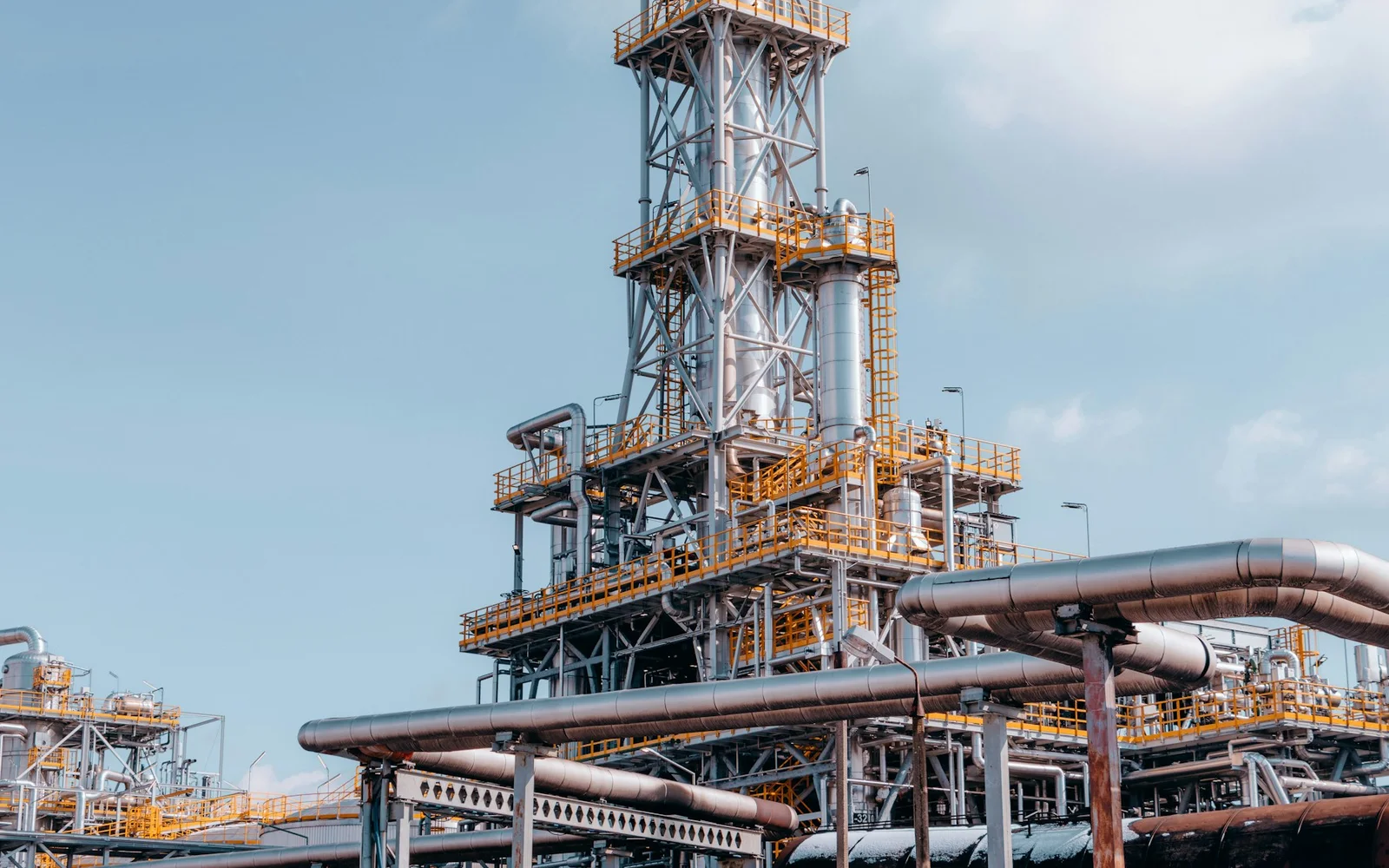 Solution blueprintPhoto · Jakub Pabis
Oil & Gas
Edge AI for predictive maintenance and leak detection
A production blueprint for detecting equipment anomalies and potential leaks close to the asset—even where connectivity is limited.
Explore the architecture ↗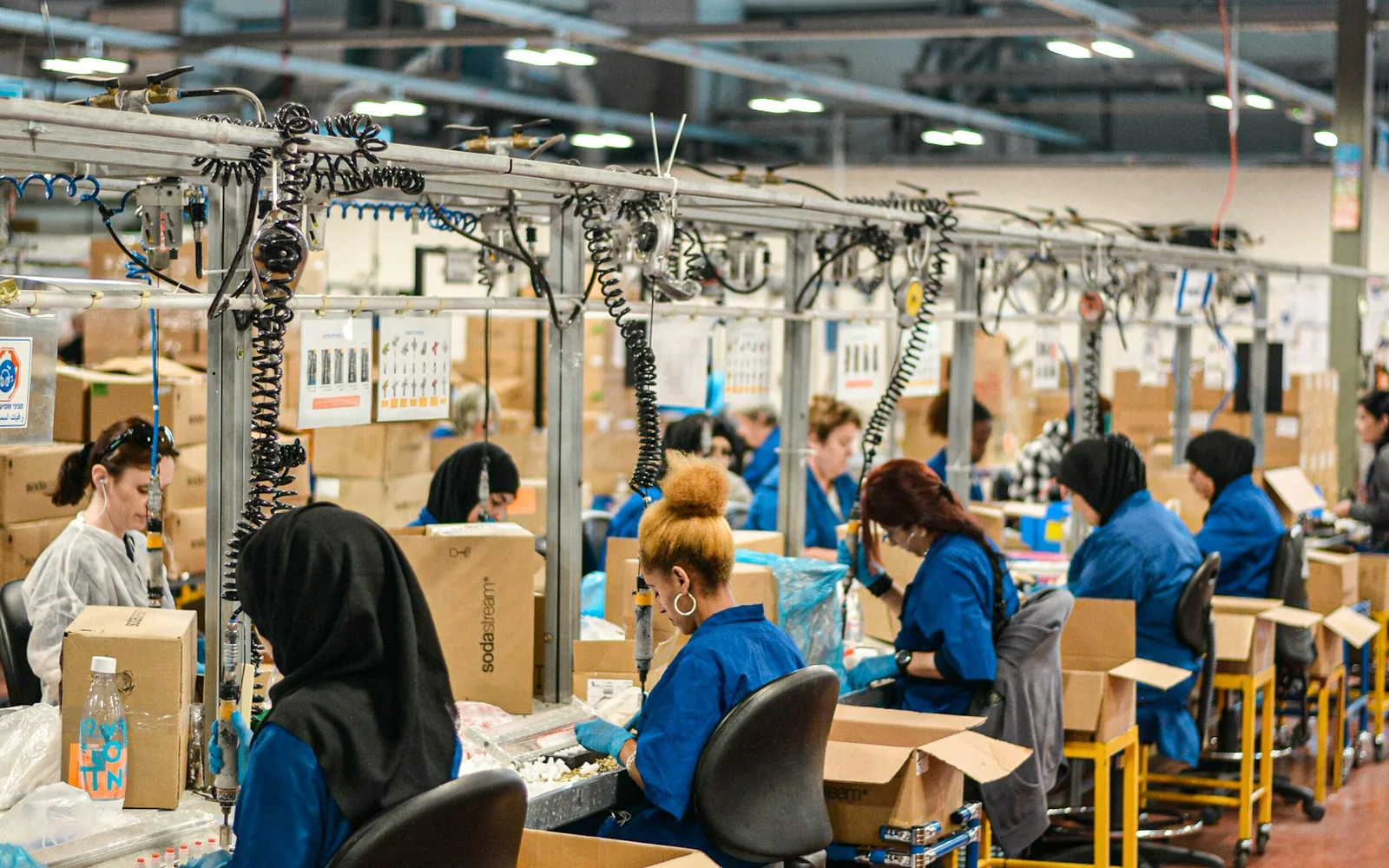 Solution blueprintPhoto · Remy Gieling
Manufacturing
Computer vision for visual quality inspection
A line-speed inspection architecture for surface defects, assembly errors, dimensional anomalies, and traceable quality decisions.
Explore the architecture ↗Test the operating assumption
Discuss this use case ↗